
Vietnam: The Anatomy of a National Rebirth
Vietnam’s economic rise is one of the most striking development turnarounds of the modern era. What began as a nation struggling to meet basic needs evolved into a strategic, globally integrated economy. The shift was not accidental, it was the result of deliberate choices that moved the country from survival mode to long‑term economic strategy.
CASE STUDY
enoma ojo (2024)
1/17/20268 min read
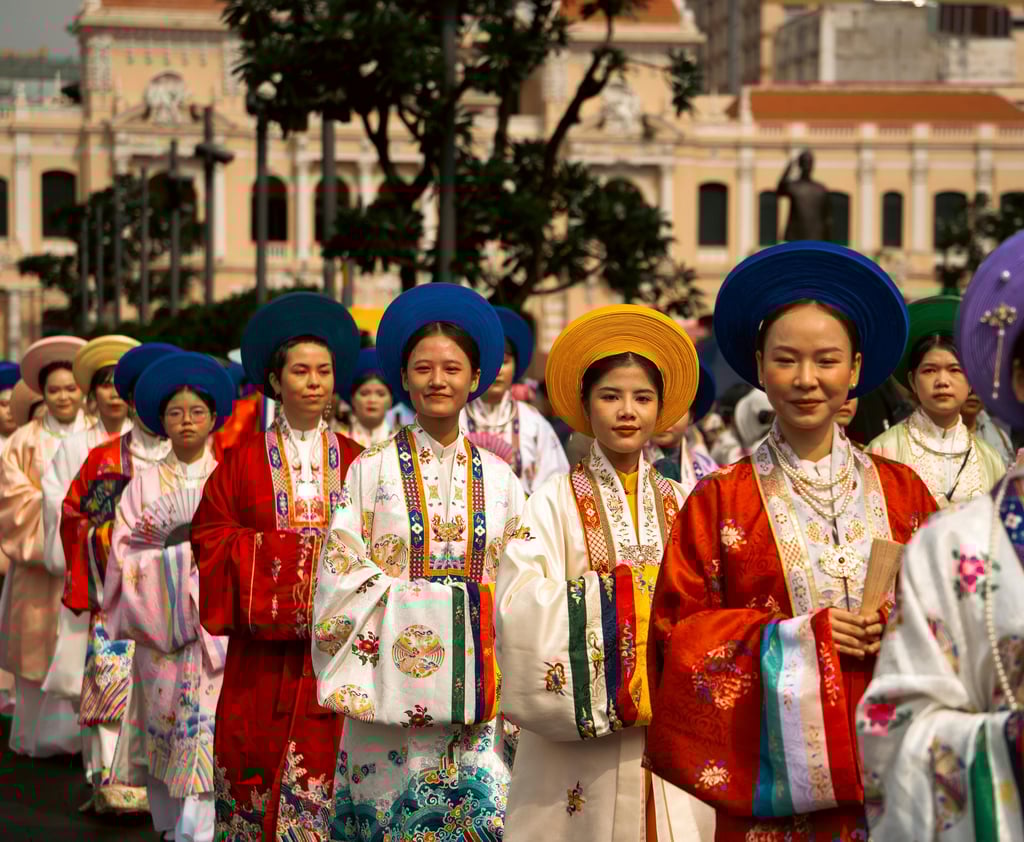
In the early morning light, an old man named Minh stood at the edge of a rice field in the Mekong Delta, watching his grandson race past him on a bicycle. The boy’s laughter carried across the water, bright and unburdened, a sound Minh never heard in his own childhood. He remembered a different Vietnam, one marked by ration cards, empty shelves, and the constant hum of uncertainty. As a young man, he had tilled this same soil under a system that offered little reward for effort and even less hope for the future. Back then, the land felt heavy, as if it carried the weight of a nation struggling to breathe. But the Vietnam around him now was unrecognizable. The dirt road where he once walked barefoot had become a paved path leading to factories, schools, and bustling markets. The village that once whispered with scarcity now pulsed with ambition. Minh’s grandson dreamed not of survival, but of becoming an engineer, a possibility that would have been unimaginable a generation earlier. The boy’s bicycle, a simple object, symbolized something profound: movement, momentum, and the freedom to imagine a life beyond the boundaries of the past.
As Minh watched the boy disappear into the distance, he felt a quiet pride rise in his chest. Vietnam had not simply rebuilt its economy; it had rebuilt its spirit. The fear that once shaped daily life, fear of hunger, fear of stagnation, fear of the unknown, had slowly given way to confidence and possibility. The country had shifted from a mindset of scarcity to one of strategy, from isolation to integration, from survival to aspiration. For Minh, the transformation was not captured in statistics or policy documents. It lived in moments like this, a child racing toward a future his grandfather could barely imagine. Vietnam’s rebirth was not just a national achievement; it was a generational inheritance. And as the sun rose over the fields, Minh understood that the true story of Vietnam’s transformation was written not only in economic reforms, but in the lives of ordinary people who learned to dream again.
Vietnam’s transformation is one of the most extraordinary national turnarounds of the modern era. Emerging from decades of war, political division, and economic collapse, the country faced a future defined by scarcity and uncertainty. Yet within a single generation, Vietnam rewrote its destiny. This case study examines how a nation once trapped in survival mode engineered a rebirth that reshaped its economy, identity, and global standing. When the Vietnam War ended in 1975, the country inherited devastation on every front. Infrastructure lay in ruins, agricultural output had collapsed, and the economy was suffocated by central planning. The psychological scars were just as deep: a population accustomed to instability, rationing, and fear. Vietnam entered the 1980s as one of the poorest countries in the world, with hyperinflation, food shortages, and widespread unemployment. The early post‑war years were marked by rigid state control. The government nationalized industries, collectivized agriculture, and restricted private enterprises. These policies, though ideologically aligned with the era, produced chronic inefficiency. Farmers lacked incentives, factories lacked innovation, and the economy stagnated. By 1985, inflation had soared above 700%, and Vietnam was on the brink of collapse.
The turning point came in 1986 with the launch of Đổi Mới, a sweeping reform program that fundamentally restructured the economy. Đổi Mới was not a single policy but a philosophical shift, a recognition that survival required openness, flexibility, and a new relationship with global markets. It marked the moment Vietnam moved from fear‑driven governance to opportunity‑driven strategy. Under Đổi Mới, Vietnam decentralized economic control, legalized private businesses, and encouraged entrepreneurship. Farmers were granted land‑use rights, allowing them to profit from their labor for the first time in decades. This single reform ignited an agricultural revolution. Vietnam, once dependent on food aid, became one of the world’s largest exporters of rice and coffee. Foreign investment soon followed. Vietnam opened its doors to global companies seeking stable labor, competitive costs, and a government committed to reform. Industrial zones emerged across the country, attracting manufacturers in textiles, electronics, and consumer goods. This shift from subsistence agriculture to export‑oriented manufacturing became the backbone of Vietnam’s economic rise.
By the early 2000s, Vietnam had integrated deeply into global trade networks. The country joined ASEAN, normalized relations with the United States, and later entered the World Trade Organization. These moves signaled to the world that Vietnam was not merely reforming, it was reinventing itself as a global economic player. The results were staggering. GDP per capita, once below $100 in the 1980s, surged into the thousands. Poverty rates plummeted. Millions entered the middle class. Vietnam became one of the fastest‑growing economies in Asia, rivaling nations that had industrialized decades earlier. The transformation was not accidental; it was engineered through deliberate policy, disciplined execution, and a national mindset shift. But Vietnam’s rebirth was not only economic, it was also psychological. A population once conditioned by scarcity began to internalize possibility. The fear of instability gave way to the confidence of opportunity. Young people pursued education, entrepreneurship, and global careers. Families invested in the future rather than merely surviving the present. This shift in collective psychology was as important as any policy reform.
Education became a cornerstone of Vietnam’s rise. The government invested heavily in literacy, STEM training, and vocational programs. As a result, Vietnam developed a skilled, disciplined workforce that attracted high‑value industries. Global technology firms began to see Vietnam not just as a manufacturing hub, but as a center for innovation and digital services. The private sector flourished. Small and medium‑sized enterprises became engines of job creation and innovation. Vietnamese entrepreneurs built companies in technology, retail, logistics, and finance. The spirit of enterprise, once suppressed, became a defining feature of the new Vietnam. Yet the transformation was not without challenges. Rapid growth strained infrastructure, widened inequality, and exposed the country to global economic shocks. Environmental pressures mounted as industrialization accelerated. Vietnam also faced the challenge of moving from low‑cost manufacturing to high‑value production, a transition that requires deeper innovation and stronger institutions. Despite these challenges, Vietnam continued to evolve. The government launched new reforms to strengthen governance, attract high‑tech investment, and modernize the financial sector. The country positioned itself as a key player in global supply chains, especially as companies sought alternatives to China. Vietnam’s strategic geography, political stability, and reform‑oriented mindset made it a natural choice.
Today, Vietnam stands as a testament to what is possible when a nation confronts its fears, reimagines its identity, and commits to long‑term transformation. The country’s journey from war‑torn isolation to global integration is not just an economic story, it is a story of resilience, adaptability, and collective will. Vietnam’s national rebirth offers a powerful lesson for the world: transformation begins when a society shifts from survival mode to strategic ambition. When fear no longer dictates decisions, nations, like individuals, unlock their capacity for reinvention. Vietnam’s rise is proof that even the most difficult histories can give birth to extraordinary futures.
Lessons for other developing countries!
Transformation Begins With a Mindset Shift. Vietnam’s greatest reform wasn’t economic, it was psychological. The country moved from a mindset of fear and scarcity to one of possibility and agency. Developing nations must recognize that growth starts when a society believes it can grow. Mindset is the foundation of policy. Reform requires courage, not perfection. Đổi Mới (Renovation) was launched during a crisis, with no guarantee of success. Vietnam didn’t wait for perfect conditions; it acted boldly. The deeper lesson is that waiting for stability before reform is a trap. Nations transform when leaders take calculated risks and trust their people to adapt. Vietnam learned that people work harder, innovate more, and produce better outcomes when they have something to gain. Land‑use rights, private enterprise, and market incentives unlocked productivity.
Policies should reflect real-life behaviors and practices. The policy of open doors creates opportunities. Vietnam’s integration into global markets, ASEAN, and WTO trade agreements accelerated its rise. Developing nations often fear openness, but Vietnam shows that strategic openness attracts investment, technology, and jobs. Isolation is not a choice; it protects nothing; it only preserves poverty. Vietnam realized that Agriculture is the first engine of inclusive growth. Vietnam’s agricultural reforms lifted millions out of poverty before manufacturing took off. For many developing nations, agriculture is still the backbone of the economy. The lesson is that when nations transform the rural economy first, the entire nation rises.
Education is the obvious long-term multiplier. Vietnam invested heavily in literacy, STEM, and vocational training. This created a disciplined, skilled workforce that global companies trust. Education is not a social program; it is an economic strategy. Education is one of the most powerful drivers of national progress. It builds human capital, strengthens economies, and expands opportunity. Countries with strong education systems experience faster growth because a skilled population is more productive, more innovative, and better equipped for modern industries. Education also reduces poverty by increasing individual earning potential and breaking intergenerational cycles of deprivation. Beyond economics, education strengthens social cohesion. It promotes civic participation, reduces conflict, and builds trust within communities. Educated populations make healthier choices, live longer, and raise healthier families, improving national well‑being and reducing public health costs. Education also enhances a nation’s resilience, enabling societies to adapt to technological change, global competition, and economic shocks. Finally, education fuels innovation. It creates the scientists, engineers, entrepreneurs, and thinkers who drive technological advancement and industrial transformation. In every sense, education is not just a social service; it is the foundation of sustainable development, national stability, and long‑term prosperity.
Political stability is one of the strongest foundations for national growth. It reduces uncertainty, which is the biggest barrier to investment. When policies are predictable and leadership is consistent, investors feel confident that their capital, contracts, and long‑term plans are safe. This confidence attracts foreign direct investment, lowers business risks, and encourages companies to expand. Stability also allows governments to implement long‑term development strategies — from infrastructure to education to industrial policy — without disruption. It strengthens institutions, improves the rule of law, and reduces the hidden costs of doing business, such as corruption, security risks, and regulatory volatility. Most importantly, political stability creates psychological safety for citizens. When people trust the future, they are more willing to start businesses, take risks, innovate, and invest in their own skills. This unleashes domestic entrepreneurship and builds a stronger, more resilient economy. In short, political stability lowers risk, builds confidence, strengthens institutions, and unlocks both foreign and local investment, making it a critical driver of sustainable economic development.
Vietnam’s story is a masterclass in national transformation. It shows that change is never instant, but momentum is everything. Each reform built on the last, proving that progress compounds and that small, consistent wins can create historic breakthroughs. Vietnam confronted its trauma, war, division, scarcity, and chose reinvention over resentment. Its rise demonstrates that development is not merely an economic project, but a psychological one, driven by courage, clarity, and collective will. A nation begins to rise the moment its people stop living in survival mode and start believing in possibility.
As evening settled over Ho Chi Minh City, the lights of the skyline flickered to life, reflecting off the Saigon River like a constellation reborn on earth. A young woman named Lan stood on the balcony of her small apartment, watching the city hum with energy. Her parents had grown up in a Vietnam defined by scarcity and uncertainty, but she lived in a Vietnam defined by motion, scooters weaving through the streets, cranes rising over new districts, and the steady rhythm of a nation building toward tomorrow. Lan thought about the stories her father used to tell: the ration books, the long queues, the fear of speaking too boldly or dreaming too widely. Those memories felt like they belonged to another world. Her own life was shaped by opportunity, a university degree, a job in a global tech firm, colleagues from around the world, and a future that felt open rather than predetermined. She knew her generation was living inside the results of decisions made long before she was born: decisions to reform, to open, to trust the future instead of fearing it.
As she looked out over the glowing city, she understood something her father had once said but she had never fully grasped: “A nation changes when its people begin to believe that change is possible.” Vietnam had not simply rebuilt its economy; it had rebuilt its imagination. The country’s rebirth lived in the quiet confidence of young people like her, people who no longer carried the weight of survival, but the momentum of possibility. And in that moment, Lan realized that Vietnam’s greatest achievement was not the skyscrapers or the factories or the trade agreements. It was the simple, profound truth that a nation can rewrite its story when its people choose courage over fear, and hope over history.
The names used in this case study are entirely fictional and are used solely for illustrative purposes.
© 2026 Enoma Ojo. All rights reserved.