
What We Inherit, What We Choose, and What We Build.
This article examines the three forces that define every human life: what we inherit, what we choose, and what we build, and shows how transformation begins when we stop fearing our origins and start shaping our future with intention.
enoma ojo (2025)
1/24/20265 min read
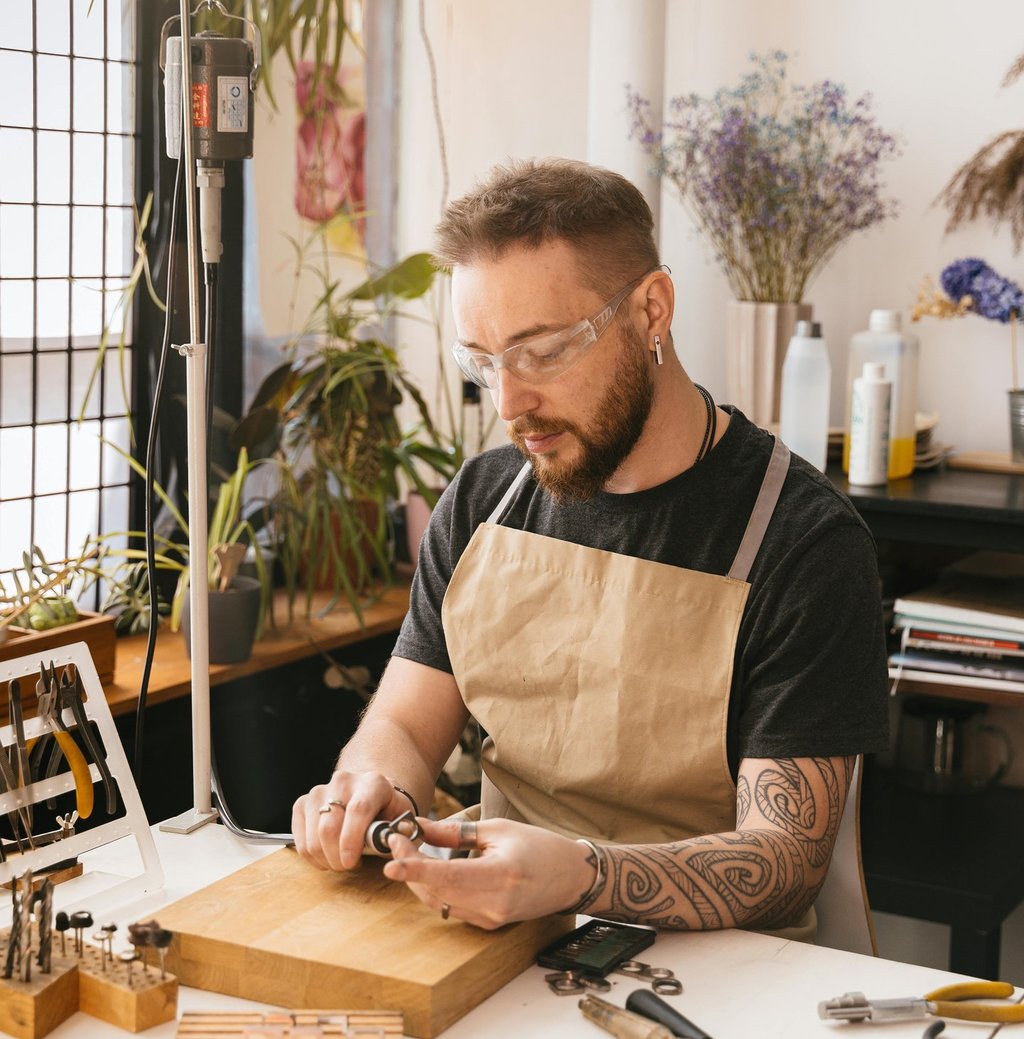
When Daniel was twelve, he discovered a box of old tools in the corner of his father’s workshop. The handles were worn smooth, the metal edges dulled by years of use. His father, a quiet carpenter who rarely spoke about his past, told him the tools had belonged to Daniel’s grandfather, a man Daniel had never met.
Daniel grew up hearing fragments of that grandfather’s story: a man who worked hard but struggled with anger, who built beautiful furniture but broke relationships just as easily. The tools were the only inheritance he left behind, a mixture of skill, silence, and unresolved pain.
For years, Daniel avoided the workshop. He feared becoming like the man whose tools he now owned. But as he grew older, he realized something important: inheritance is not identity. The tools were not a prophecy. They were simply tools.
At twenty‑five, after losing a job he hated, Daniel returned to the workshop. He picked up the same hammer his grandfather once held and made a choice, not to repeat the past, but to redeem it. He began building small pieces of furniture, each one better than the last. He studied craftsmanship, discipline, and patience. He learned to shape wood the way he wanted his life to be shaped: intentionally.
One day, while sanding a table, he noticed something. The tools that once felt heavy with history now felt light in his hands. They had not changed — he had. By choosing differently, he had transformed what he inherited.
Years later, Daniel opened a small furniture studio. Above the entrance, he hung a simple sign: “Built With Intention.” People came not just for the furniture, but for the story, the story of a man who took what he inherited, made a different choice, and built something that would outlive him.
Daniel eventually passed the tools to his own son. But this time, the inheritance was different. It was no longer a box of unresolved history. It was a legacy of clarity, courage, and craftsmanship. And as he handed the tools over, he said, “These don’t define you. They’re just the starting point. What you build with them —that’s your story.”
Every human life begins with an inheritance, not material wealth, but the invisible forces that shape identity before we understand them. These inheritances include family history, cultural expectations, emotional patterns, strengths, wounds, and the environments we grow up in. Inheritance is powerful because it operates quietly, influencing how we see ourselves and what we believe is possible. Yet inheritance is not destiny; it is simply the starting point, not the conclusion of a person’s life. Recognizing what we inherited is the first step toward clarity, because naming our origins gives us the power to reshape them. Some inherit stability and encouragement, while others inherit chaos or scarcity, but everyone receives a mixture of blessings and burdens.
Understanding this mixture helps us see inheritance as context rather than a cage, and as raw material rather than a life sentence. The turning point in every life comes through choice, the moment we decide what to keep, what to release, and what to transform. Choice is where responsibility enters, allowing us to break harmful cycles, continue meaningful legacies, or rewrite limiting narratives. Small, consistent choices accumulate over time, shaping character, direction, and ultimately the trajectory of our lives. Beyond inheritance and choice lies the work of building, the deliberate creation of habits, families, systems, and structures that reflect our values.
Lindner (2025) on Intergenerational Poverty Statistics, reports that in the United States, 43% of children born to parents in the bottom income quintile remain there as adults, showing how deeply inheritance shapes early life outcomes. Globally, half of all economic inequality is passed from one generation to the next, demonstrating how powerful inherited conditions are. Children born into low-income families around 1980 had a 34% chance of remaining low-income in adulthood, compared to only 17% for those not born in poverty.
Only 4% of children raised in the bottom income quintile rise to the top quintile, showing how difficult upward mobility is without intentional choices and structural support. Children from low-income families who earn a college degree have a 41% chance of reaching the top two income quintiles, proving that certain choices dramatically shift outcomes. Yet only 10% of children from the bottom income quartile obtain a college degree by age 24, compared to 58% from the top quartile, illustrating how unequal access shapes the choices available.
This report also showed that between 1980 and 2014, the share of U.S. children earning more than their parents fell from 90% to 50%, showing that building a better future now requires more intentional effort than in previous generations. Wealth is even more “sticky” than income: 37% of wealth advantage persists across generations, meaning what families build financially has a long-term impact. Neighborhoods matter: low-income Black children are less likely to experience upward mobility than White children living in the same neighborhoods, showing how built environments shape long-term outcomes.
Building requires patience, discipline, and courage, because building is the slow work of turning intention into reality. It is the process of taking something that exists only in the mind, a vision, a value, a hope, and shaping it into something visible, lasting, and impactful. Building demands that we confront our limitations, stretch our abilities, and stay committed long after the excitement fades. It is not glamorous work; it is steady work. But it is in that steadiness that transformation takes root. What we build becomes the most tangible expression of who we are. Our structures, whether they are habits, families, businesses, communities, or systems, reveal our priorities more honestly than our words ever could. They carry our fingerprints. They reflect our values. And they influence others long after our choices are made. Long after we are gone, people will interact with the things we built, and in doing so, they will encounter a piece of us. This is why building matters. It is how we turn our internal clarity into an external legacy.
Together, inheritance, choice, and building form the three forces that shape every life. Inheritance is the story we receive, the starting point we did not choose but must acknowledge. Choice is the story we take responsibility for, the moment we decide what to keep, what to release, and what to transform. And building is the story we leave behind, the structures, opportunities, and pathways that outlive us. When these three forces align, a person moves from simply surviving their circumstances to actively shaping their future. Inheritance gives context. Choice gives direction. Building gives legacy. And it is in the interplay of these forces that a life becomes not just lived but authored.
This article concludes and emphasizes that true transformation begins with a shift in perspective: instead of questioning why we inherited certain circumstances, we gain power by focusing on what we can create from them. This mindset moves us from passive recipients of life to active architects of our future. It argues that inheritance, whether positive or painful, is only the starting point. What ultimately shapes a person’s life is not the hand they were dealt, but the decisions they make in response to it. Choice becomes the defining force that redirects the trajectory of a life. The conclusion highlights that every meaningful change begins with intentional decisions, decisions to break cycles, continue legacies, or build something better than what was received. These choices accumulate into character and direction, forming the foundation of transformation. It then explains that what we build from those choices becomes our lasting impact. The structures we create, habits, families, systems, businesses, or communities, become visible evidence of our values and the legacy we leave behind.
Ultimately, we are not defined by our inheritance but by our choices, and we are remembered by what we build. Transformation becomes possible the moment we stop dwelling on the past and start constructing a future rooted in clarity, courage, and purpose. Transformation begins the moment we stop questioning why we inherited certain circumstances and start focusing on what we can create from them. We are shaped by the choices we make and ultimately remembered by the structures, legacies, and impact we build.
© 2026 Enoma Ojo Inquiry & Insight. All Rights Reserved. Original content, analysis, and narrative frameworks protected under applicable copyright laws.